

Receptionist duties centre on being the first point of contact for a building or business: greeting and signing in visitors, answering calls and enquiries, managing bookings, handling post and deliveries, and keeping the reception area safe, tidy and professional. In most UK workplaces the receptionist also plays a quiet but important part in security and fire safety, because they know who is on site at any moment.
This guide sets out the full range of receptionist responsibilities, the skills and training the role needs, how it changes between a corporate office, an airport and a hotel, and a copy-ready receptionist job description that employers can adapt.
What does a receptionist do?
A receptionist manages the front desk and the flow of people and information through it. The role blends customer service, administration and a degree of site security. Visitors form their first impression of an organisation at reception, so the person on the desk sets the tone for everything that follows.
The National Careers Service describes typical receptionist work as greeting and directing visitors, managing sign-ins and security passes, dealing with enquiries in person, by phone and online, handling bookings and appointments, and managing post and deliveries. In some settings the role also includes taking payments and processing invoices.
Corporate receptionist vs general receptionist
A corporate receptionist typically works in an office building or business headquarters. Alongside visitor management, they often book meeting rooms, coordinate catering for meetings, issue visitor and contractor passes, liaise with security and facilities teams, and support senior staff with diary or travel arrangements. The emphasis is on discretion, polish and accurate record-keeping.
A general or customer-facing receptionist, such as one in a hotel, clinic or leisure centre, tends to spend more time on bookings, payments and resolving customer queries. For a closer look at how reception sits within the wider front-of-house team, see our front of house job description guide.
Key receptionist duties and responsibilities
The exact list depends on the site, but most receptionist job descriptions in the UK cover the following core duties:
- Welcoming visitors: greeting guests, confirming appointments and notifying the person they are visiting.
- Visitor and contractor sign-in: recording arrivals and departures, issuing and collecting passes, and checking identification where site rules require it.
- Telephone and email handling: answering the main switchboard, routing calls, taking accurate messages and responding to general enquiries.
- Bookings and diaries: managing meeting rooms, appointments or guest reservations and resolving double bookings.
- Post and deliveries: receiving, logging and distributing post and parcels, and arranging outgoing couriers.
- Security awareness: following access control procedures, challenging unexpected visitors politely and reporting concerns.
- Health and safety: keeping visitor records up to date for fire roll calls, knowing evacuation procedures and reporting hazards in the reception area.
- Administration: data entry, filing, ordering stationery, and in some roles handling payments or invoices.
- Presentation of the area: keeping the desk, seating area and literature tidy and making sure the space reflects the organisation well.
A typical day on reception
Shifts usually start with opening up the desk: checking the visitor list for the day, confirming meeting room bookings, reviewing overnight messages and handing over with security or the previous shift. Mornings are often the busiest for arrivals and calls. Through the day the receptionist balances walk-up visitors, phone calls and admin tasks, prioritising the person standing at the desk. At close, they reconcile passes, make sure all visitors have signed out and hand over any outstanding issues.
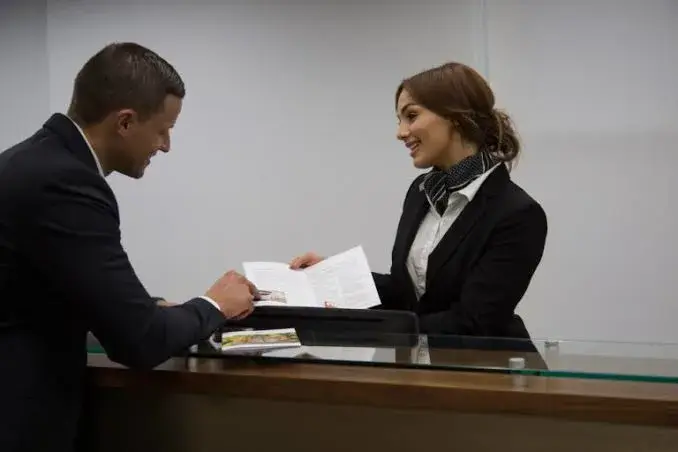
Skills and qualities of a good receptionist
Receptionist responsibilities reward a particular mix of people skills and organisation. Employers typically look for:
- Clear, friendly verbal communication and a professional telephone manner
- Calmness and patience under pressure, including with frustrated or upset visitors
- Strong attention to detail for sign-in records, messages and bookings
- Confident use of computers, booking systems and visitor management software
- Discretion with confidential information and personal data
- Teamwork and a willingness to help colleagues across facilities, security and administration
- Good judgement about when to escalate an issue
In busy multicultural environments, such as international airports, additional languages can be a real asset at the desk.
Qualifications and training
There is no single required qualification. Many receptionists apply directly with customer service or admin experience, while others start through temporary admin work or move across from hospitality roles. According to the National Careers Service receptionist profile, routes include college courses in business administration, front of house reception or customer service, and apprenticeships.
Relevant apprenticeships include the Level 2 Customer Service Practitioner and Administration Assistant standards, with Hospitality Supervisor available at Level 3. Some employers ask for GCSEs in English and maths and good IT skills.
Once in post, useful training includes:
- Site induction, fire evacuation and first-aid awareness
- Data protection basics for handling visitor records and personal information
- Conflict resolution and handling difficult conversations
- Security awareness, including access control and suspicious behaviour reporting
- Systems training for switchboards, booking tools and visitor management software
Receptionist duties in airports, retail and hospitality
WWSG supplies front-of-house and customer-facing staff across airport, retail, hospitality and corporate settings, and the role shifts noticeably between them.
Corporate offices
The focus is visitor management, meeting room coordination and supporting a professional image. Corporate receptionists often work closely with facilities management, so they are the people who log reported faults, receive contractors and know who holds keys.
Airports
Reception and information points in airports, airport offices and airside facilities operate within a tightly controlled security environment. Staff may need to check passes, follow strict escort and access rules and complete airport ID vetting before starting. Shifts commonly cover early mornings, late evenings and weekends to match flight schedules, and staff regularly help passengers and visitors who are unfamiliar with the site.
Hotels and hospitality
Hotel receptionists handle check-in and check-out, payments, room allocation and guest requests, working closely with housekeeping and maintenance. The role often runs around the clock on shifts, and guest satisfaction is the main measure of success.
Reception is closely related to, but not the same as, customer service assistant work. Our article on front of house vs customer service assistants explains where the boundaries usually sit.
Sample receptionist job description (copy-ready)
Employers can adapt the template below. Replace the bracketed sections with your own details and remove any duties that do not apply.
| Section | Content |
|---|---|
| Job title | Receptionist / Corporate Receptionist |
| Location | [Site name and town] |
| Reports to | [Front of House Manager / Office Manager] |
| Hours | [Hours per week; shift pattern, including any early, late or weekend work] |
| Purpose of the role | To provide a professional, welcoming and secure reception service, acting as the first point of contact for visitors, staff and callers. |
| Key duties | Greet and sign in visitors and contractors; issue and recover passes; answer and route calls and emails; manage meeting room and appointment bookings; receive and distribute post and deliveries; maintain accurate visitor records for fire safety; follow security and access control procedures; keep the reception area clean and presentable; carry out general administrative tasks. |
| Skills and experience | Previous customer service or reception experience preferred; excellent communication; confident IT user; organised and detail-focused; calm under pressure; discreet with confidential information. |
| Qualifications | GCSEs in English and maths (or equivalent) desirable; relevant apprenticeship or customer service qualification an advantage. |
| Other requirements | Right to work in the UK; willingness to complete background or security vetting where the site requires it; uniform or dress code as provided. |
| Pay and benefits | [Hourly rate or salary, holiday, pension and other benefits] |
Pay and working hours
Receptionist pay varies with location, sector and responsibility. Corporate and senior receptionist roles in major cities usually pay more than entry-level positions, and shift premiums may apply for unsocial hours. Whatever the role, employers must pay at least the legal minimum. From 1 April 2026 the National Living Wage for workers aged 21 and over is £12.71 an hour, with lower minimum rates for younger workers and apprentices.
The National Careers Service notes that receptionists typically work around 37 to 40 hours a week, often including evenings, weekends and bank holidays on a shift basis.
Career progression for receptionists
Reception is a strong starting point for a wide range of careers. With experience, common next steps include:
- Senior receptionist or reception team leader, coordinating rotas and training new starters.
- Front of house supervisor or manager, responsible for the full visitor experience across a site.
- Office manager or personal assistant, building on diary management and administration skills.
- Facilities coordinator, using knowledge of contractors, faults and building operations.
- Specialist routes such as medical secretary in healthcare settings, or guest services management in hotels.
Looking for work at London Luton or Stansted?We recruit cashiers, sales associates, customer service and front of house staff.
Frequently Asked Questions
What are the main duties of a receptionist?
The main duties are greeting and signing in visitors, answering calls and enquiries, managing bookings, handling post and deliveries, supporting security and fire procedures, and carrying out general administration.
What is the difference between a receptionist and a corporate receptionist?
A corporate receptionist works in an office or headquarters environment and usually focuses more on visitor passes, meeting rooms, hospitality for business guests and supporting senior staff, with a strong emphasis on discretion.
Do you need qualifications to be a receptionist?
Not always. Many employers value customer service experience and IT skills over formal qualifications, though GCSEs in English and maths and a relevant apprenticeship can help.
What skills should I put on a receptionist CV?
Highlight communication, customer service, organisation, attention to detail, IT and booking systems, handling confidential information and staying calm under pressure, with examples from previous roles.
Do receptionists work shifts?
Often, yes. Hotels, airports and 24-hour sites run shift patterns that include early starts, evenings, weekends and bank holidays, while many office roles follow standard business hours.
Need reliable reception and front-of-house staff?
WWSG provides trained front of house support for corporate, airport, retail and hospitality environments. To discuss your reception requirements, contact the WWSG team.